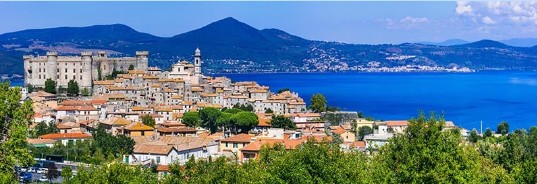
I'm spending a few weeks here in mid-July in Bracciano, a charming Italian town just north of Rome that I stumbled into by accident a few years ago.
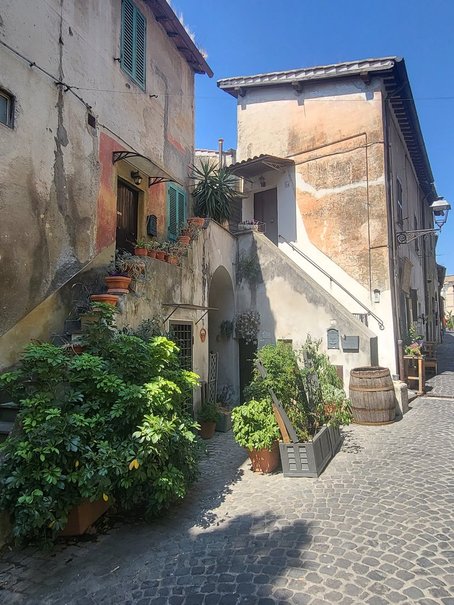 Back then, I was staying in a house in nearby Oriolo—hardly the "beautiful Italian villa" I thought I was renting based on internet photos of flowering bougainvillea and a tiny table set with caffè and cornettos. The tiny table was real, but the rest of the house was a sagging bed, musty furniture, and a town that felt like a forgotten movie set. (My friend Maryanne called Oriolo "Bore-iolo," and I later discovered the town actually stood in for impoverished Sicily in Cinema Paradiso.)
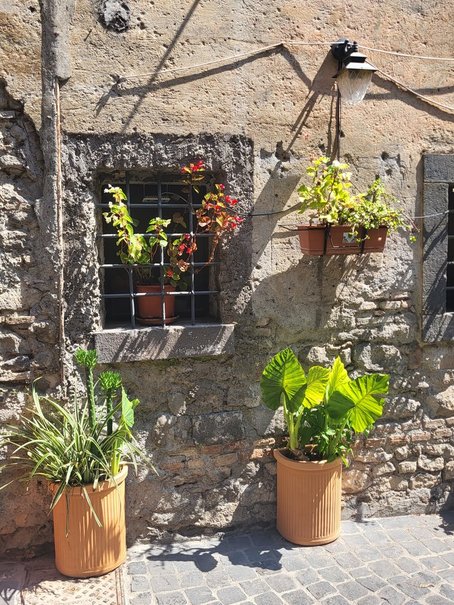 One morning, I laced up my shoes and ran down a dirt road through an aspen forest, golden light slanting between the leaves, and found myself in the next town over—Bracciano.
It held everything I'd been searching for: tiny clouds hanging above forested hillsides, a cool lake reflecting an azure sky, and the scent of espresso drifting through the piazza. A 15th-century castle towers above it all, its stone rooms filled with shadows, echoes, and medieval weaponry—places where a crime writer can't help but imagine a tourist (maybe an American in running shorts) meeting an unfortunate end.
Italy reminds me to slow down and breathe. To listen to the sound of water rolling over pebbles on the beach. To notice the way the light slants across old facades. It's a place where stories rise up from the pavement if you let them—and I plan to let them.