
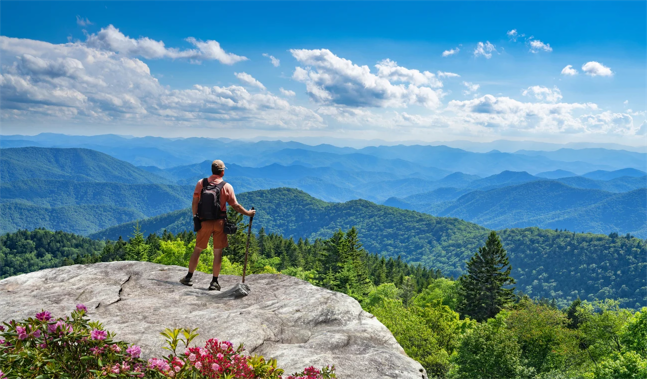
Many decades ago, when I had just turned twenty, I set out to hike the Appalachian Trail, more than 2,000 miles of mountain ridges and wilderness stretching from Springer Mountain in Georgia to Mount Katahdin in Maine.
As a teenager, I had already done plenty of hiking and camping in the Boy Scouts, and backpacking and whitewater rafting with the Pittsburgh chapter of American Youth Hostels. In my first year of college, I apparently decided I needed a bigger adventure, probably inspired by Colin Fletcher’s trendy backpacking guide, The Complete Walker.
I didn't tell my parents what I was planning, but instead spent several winter months studying topographical maps, saving money and planning my trip.
Then, come April, I was gone. I hitchhiked to Georgia (students did that then), found the trailhead, hoisted my 50-pound Kelty pack onto my shoulders and began moving northward. Slowly.
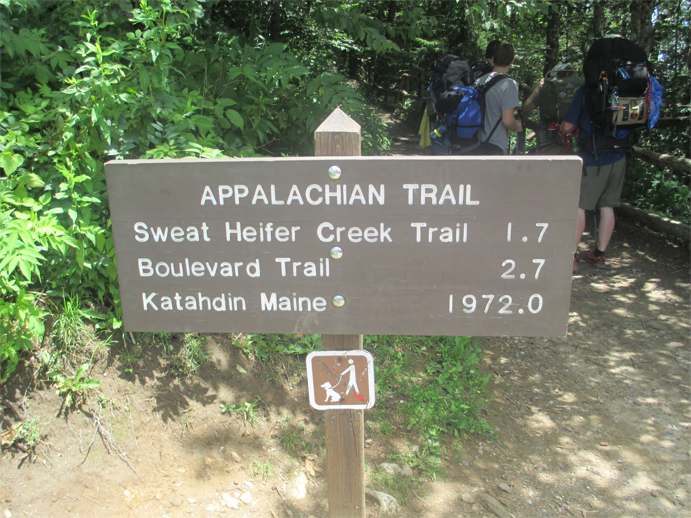
The first day I made five miles and got lost. The next day I made six miles and camped under a plastic tarp in the pouring rain because I couldn't reach any of the log lean-to shelters scattered along the route.
Within a few weeks, though, I hit my stride, putting in 15, 20, sometimes 25 miles a day through the beautiful Nantahala Mountains and the Great Smokies. Along the way I met fellow adventurers, mostly young men and women my age, but also some ancient forty-year-olds hiking with their families, and really, really ancient sixty-year-olds who loved the outdoors and were trying to keep fit.
After a few months, however, the novelty of climbing steep switchbacks, negotiating narrow ledges, and hiking down into nearby towns for supplies and a shower began to wear off.
Without the distractions of television and radio, without the structure of school, I was left with the magnificent beauty of creation—and the sad, jangled thoughts in my head.
What were these thoughts? Loneliness, depression, alienation—feelings I couldn't understand then, but which now, in retrospect, seem obvious. I told myself I was hiking the trail to experience nature in its purest form and test myself with an endurance adventure. But what I really was doing was fleeing.
My parents never divorced, but they increasingly didn't get along. By my late teens, my brother was away in the Air Force, and I was left alone, trying to blot out their bickering voices with a pillow over my head.
That was where the idea of the quiet, idyllic and remote trail first attained its imaginative pull. My brother had escaped into the Air Force. I could escape into the mountains, where screaming voices wouldn't reach me and where I might find and follow a voice of my own—or perhaps the voice of God—to propel me forward into the confusing, unknown future.
Instead, I was left with the thoughts in my head. They were as confused and jangled as ever.
Eventually, after three or four months, I limped into Front Royal, Virginia, nearly a thousand miles north of Springer Mountain, with a sprained ankle. I spent a few weeks at a local hostel, reading and recuperating, watching the other hikers come and go.
I thought I would resume my trek right up until the day I decided not to. My body was telling me I'd had enough adventure, and my mind had cleared enough to realize that I couldn't hide out forever from my feelings and my family.
I hitchhiked back to Pittsburgh, got a job and an apartment of my own, and eventually re-entered college.
I still wasn't sure where I was going, but I had discovered at least what I was fleeing from.
Photo credits: Trail sign, Billy Hathorn — Own work, CC BY 3.0; Overlook, 57hours.com.