For over a hundred years to Americans, the thick Sears catalog was more than a shopping guide. It was a wish book and a connection to the wider world. Long before online ordering and overnight delivery, Sears sold nearly everything imaginable through the mail: overalls, bicycles, wedding rings, washing machines, chicken feed, violins, revolvers, and even entire houses shipped by railroad boxcar.
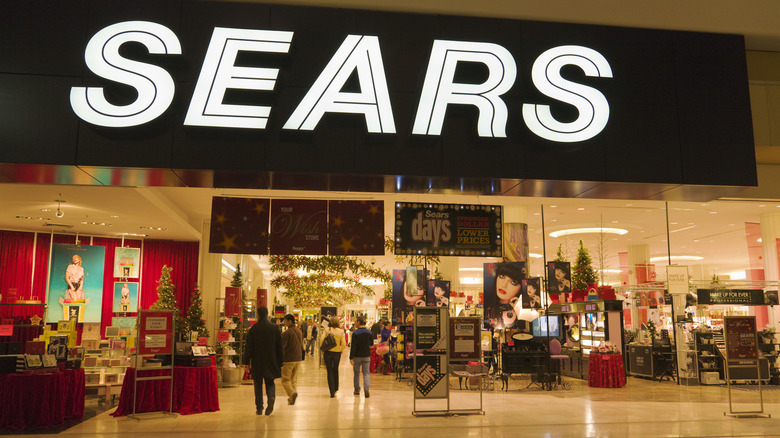
By the middle of the twentieth century, Sears had become an American empire. Stores spread across the country, anchoring suburban malls and downtown shopping districts alike. Sears wasn't merely a retailer. It was middle-class America bathed in fluorescent lights.
My family lived in a suburb of Pittsburgh, and shopping at Sears became a form of family entertainment. When the big new Sears opened nearby at South Hills Village Mall, it felt futuristic to me — shiny escalators, endless racks of clothes, and refrigerators lined up as Harvest Gold monuments to prosperity.
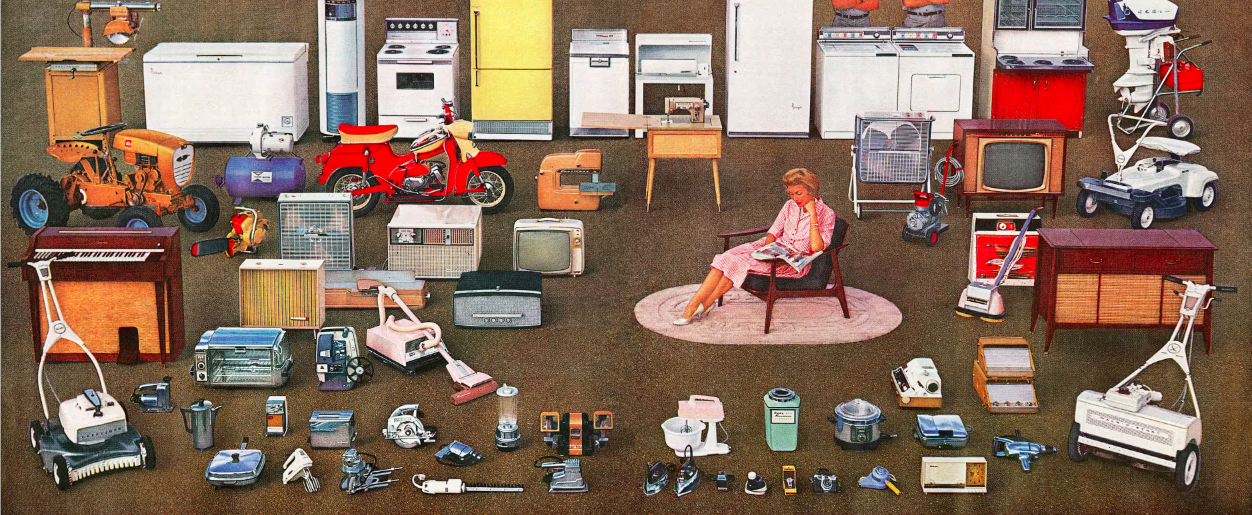 An old 1963 Sears catalog sits on a shelf in my office, research for one of my books. Leafing through it now feels like opening a time capsule from the high-water mark of postwar America. The pages offer awnings, raincoats, transistor radios, lawn tractors, and color televisions that cost nearly $500 — much more than the cost of a used car at the time.
When my parents built an addition onto our modest brick house, much of it came from Sears. The turquoise carpeting. The patterned curtains. The red, Jetsons-style armchairs that looked impossibly modern back then. Later, Sears' workmen screened in my parents' porch so they could sit outside on summer evenings without being eaten alive by mosquitoes.
 As a kid, I bought plaid pants and turtlenecks there for the first day of school. At Christmas, I searched the jewelry counter for delicate gold chains for my mother. My father trusted Craftsman tools with religious devotion, and together we used Sears locking pliers and electric drills while working on the Ford Galaxie's drum brakes in the backyard.
Looking back now, what strikes me isn't really the merchandise. It's the quiet assumption underneath it all — that ordinary American families could afford solid things, improve their homes, raise children, and expect life to gradually get better.
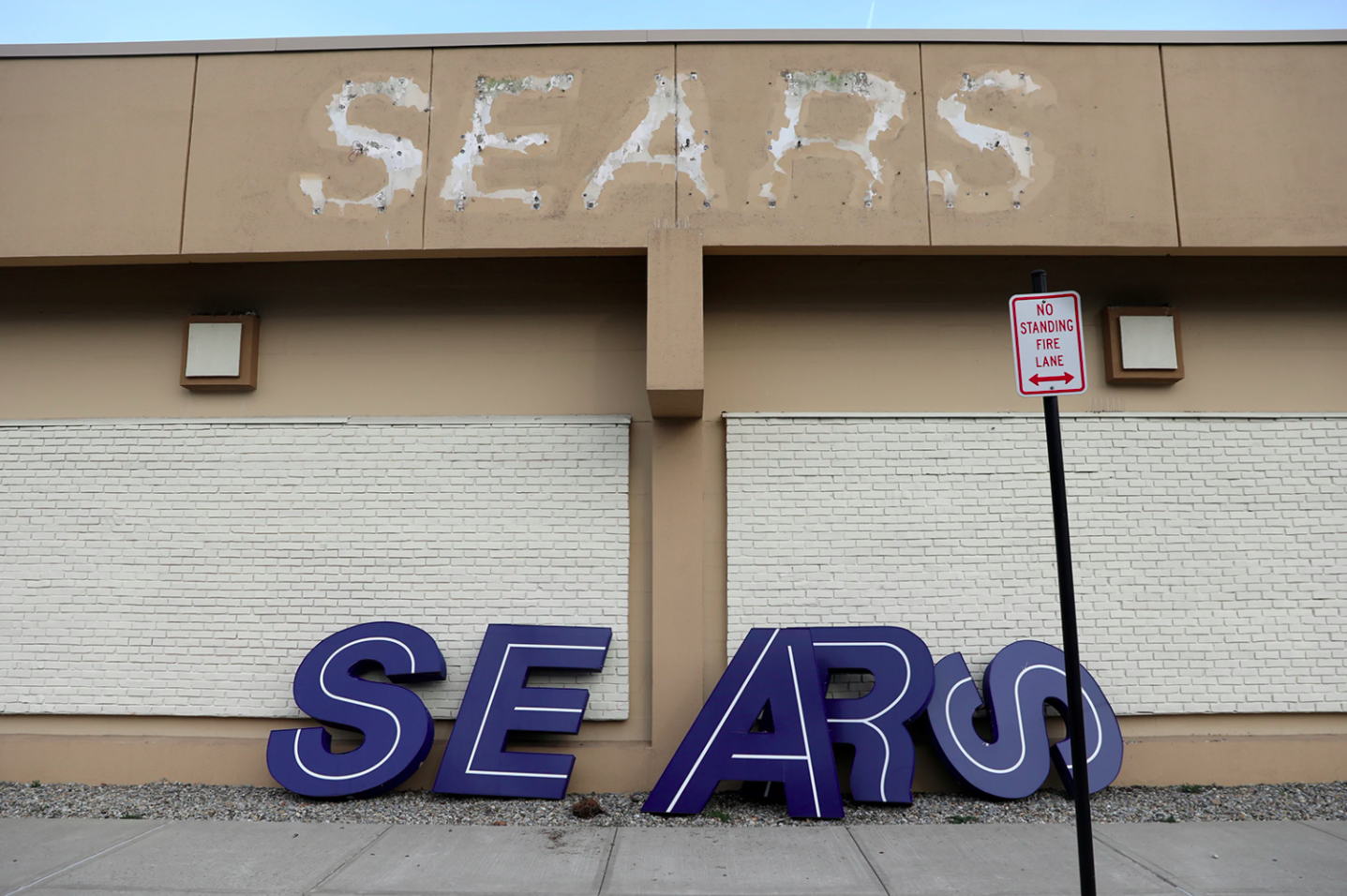
Not far from my house I pass a large shuttered store sitting there empty, the shadow of ghostly Sears lettering etched into its wall though the sign is long gone. As a crime novelist, I probably spend too much time thinking about vanished places and lost worlds. Maybe that's why those empty Sears buildings affect me the way they do. They feel less like dead stores than ghost towns from a country I once knew very well, as seen from a future that never was.